WHAT WORKING TOGETHER LOOKS LIKE
Burnout counselling isn’t about “coping better”.
It’s about understanding:
What’s driving the pressure
Why your system feels constantly activated
How to reconnect with yourself safely
Together, we work at your pace to gently untangle what’s been building over time.
WHO THIS IS FOR
This is for you if:
You’re high performing, but it’s getting harder to maintain
You feel like you can’t stop—even though you know you should
You’ve built something meaningful, but feel trapped by it
You’re used to being in control—but it’s starting to slip
You don’t want to burn everything down just to feel better
This is not for people who want to opt out of responsibility.
This is for people who want to keep performing—without destroying themselves in the process.
Helping high-functioning professionals who can’t switch off recover from burnout and reconnect with themselves through practical, trauma-informed counselling.
This might feel familiar.
You’re someone people rely on.
You get things done, stay on top of things, and keep showing up — even when you’re exhausted.
From the outside, it works.
But internally, it’s harder to switch off.
Even when you try to rest, your mind keeps going.
There’s a sense you should be doing more… or that you’re falling behind.
Over time, being productive hasn’t just been something you do —
it’s become part of how you measure your value.
So slowing down doesn’t feel simple.
It can feel uncomfortable. Sometimes even wrong.
You might look like you’re holding it all together.
“You try to rest, but your mind doesn’t switch off — and part of you feels like you shouldn’t be slowing down anyway.”
“You’re getting things done, but it’s driven by pressure, not choice — and it’s starting to feel unsustainable.”
“This isn’t just your personality or work ethic. This is a pattern that’s costing you.”
This is what burnout can look like — especially for high-functioning people.
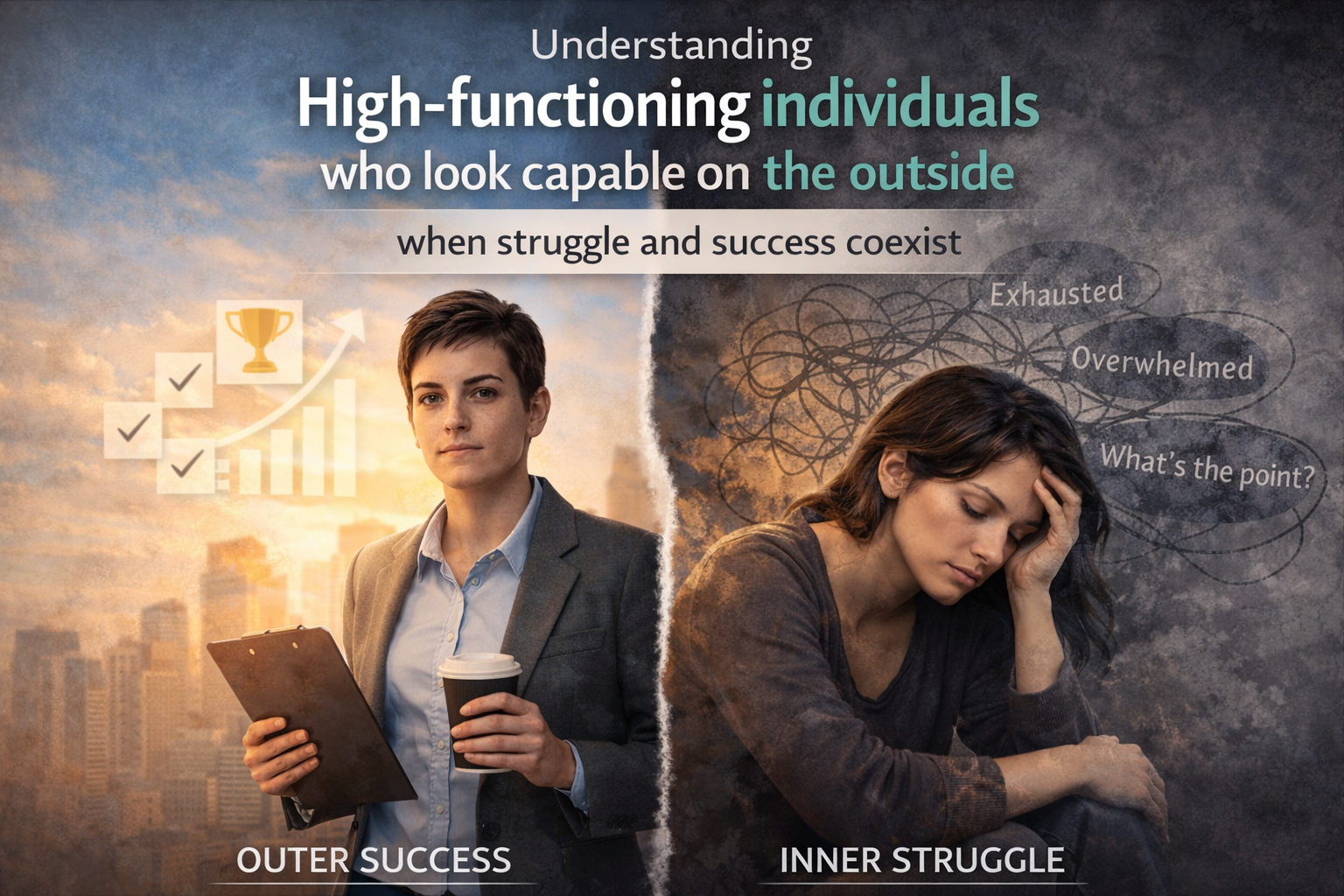
You keep telling yourself it’s just a busy season. That once things settle, you’ll feel normal again.
But it hasn’t settled.
And deep down, you know this isn’t sustainable.
This isn’t about working harder.
It’s about what happens when high performers push past their limits for too long.
If nothing changes, something will break.
Your clarity. Your health. Your relationships. Or your performance.
Burnout isn’t always obvious.
It can look like:
Constant mental fatigue
Feeling numb or flat
Irritability or low patience
Overthinking and difficulty switching off
A sense that something isn’t right — even if everything “looks fine”
The Hidden Signs of High-Functioning Burnout
Burnout doesn’t always stop you.
Sometimes, it makes you push harder.
From the outside, you might seem:
Capable
Successful
In control
But internally, it’s a different story.
Common signs
You can’t relax, even when you have time
You feel emotionally flat or disconnected
You rely on pressure to get things done
You feel like you’re “performing” your life
Rest doesn’t feel restorative
THE REAL COST (WHAT HAPPENS IF NOTHING CHANGES)
This doesn’t stay where it is.
High-functioning burnout escalates.
Your decision-making gets slower and less accurate
Your performance starts to slip (even if no one’s said it yet)
Small things feel overwhelming
Your tolerance drops—at work and at home
You disconnect from people you care about
Your health starts forcing you to pay attention
And eventually… your system will make the decision for you.
Not in a controlled way.
Why it’s easy to miss
High-functioning burnout is often reinforced by:
External validation
High standards
A strong sense of responsibility
So instead of stopping, you adapt — until your system can’t sustain it anymore.
WHY YOU HAVEN’T STOPPED
You’re not lazy. You’re not weak.
You’ve built your identity on being the one who:
handles it
pushes through
gets results
So slowing down doesn’t feel like relief.
It feels like risk.
Like if you stop—even briefly—everything might fall apart.
Your business. Your role. Your reputation. Your responsibilities.
So you keep going.
Even when your body, your focus, and your emotions are telling you something isn’t right.
You don’t need to wait until everything breaks. Get back in control
Or if you’re not ready for that yet: Find out what’s actually going on under the surface
WHAT WORKING TOGETHER LOOKS LIKE
Burnout counselling isn’t about “coping better”.
It’s about understanding:
What’s driving the pressure
Why your system feels constantly activated
How to reconnect with yourself safely
Together, we work at your pace to gently untangle what’s been building over time.
The Link Between Trauma and Burnout
Understanding the Connection Between Trauma and Burnout
Burnout isn’t always just about workload.
For many people, it’s connected to deeper patterns in the nervous system.
How trauma can show up as burnout
Constant overdrive or hyper-responsibility
Difficulty resting or slowing down
Feeling unsafe when not productive
Chronic tension or fatigue
Why this matter?
If burnout is rooted in deeper patterns, pushing through won’t resolve it.
It needs a different kind of support — one that works with your nervous system, not against it.